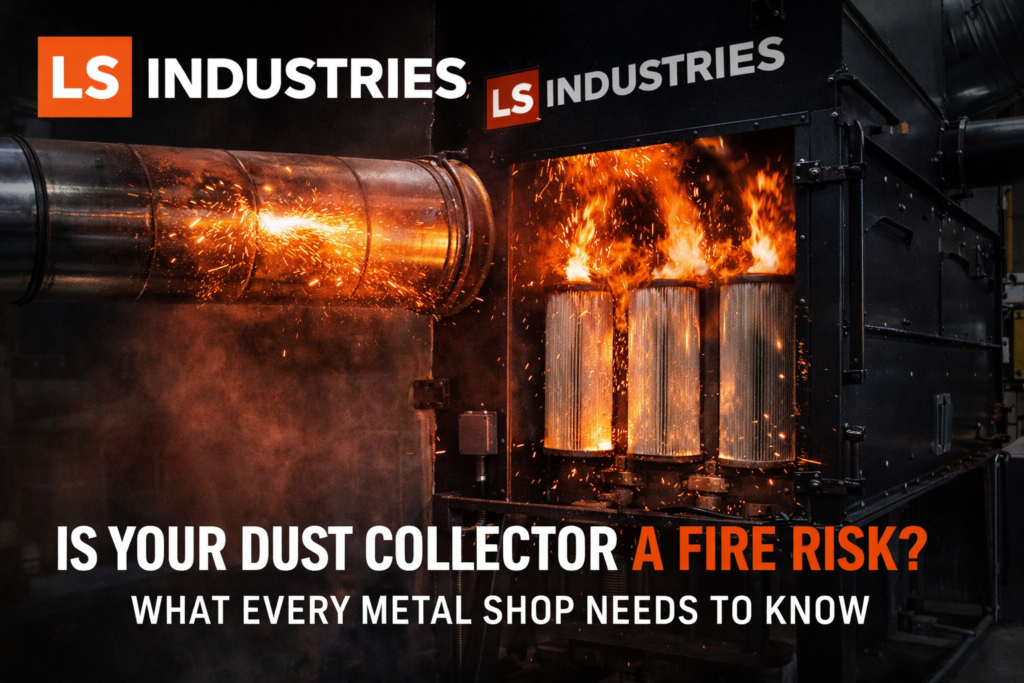
Most shops don’t think about dust collection as a fire risk, until it’s too late.
Download our Dust Collection 10-Point Audit Safety Checklist to see if your system is at risk.
Fine metal dust from grinding, blasting, or cutting isn’t just messy, it can be explosive under the right conditions. And those conditions happen more often than people realize.
Ensuring fire safety involves multiple strategies and components:
1. Understanding Dust Combustibility
- Material Properties: Different metals have different combustibility levels. Aluminum, magnesium, and titanium dust are highly combustible.
- Particle Size: Finer dust particles have a larger surface area relative to their volume, making them more prone to ignition.
- Concentration: Dust clouds within a certain concentration range are more likely to explode if an ignition source is present.
2. Dust Collection System Design
- Proper Ventilation: Ensure adequate ventilation to prevent dust accumulation.
- Ductwork: Design ductwork to minimize dust buildup, avoiding sharp bends and using smooth interiors.
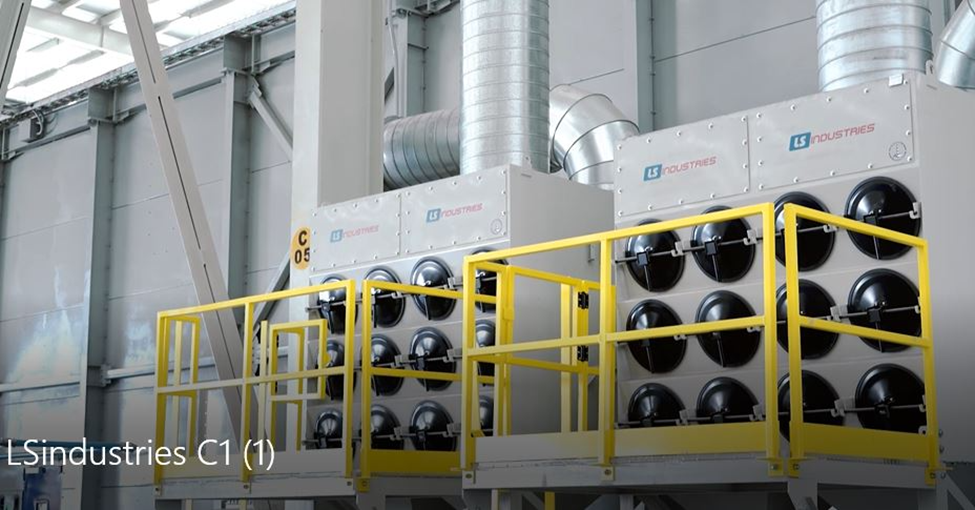
- Dust Collection Units: Use high-efficiency dust collectors with appropriate filters to capture fine dust.
3. Preventative Measures
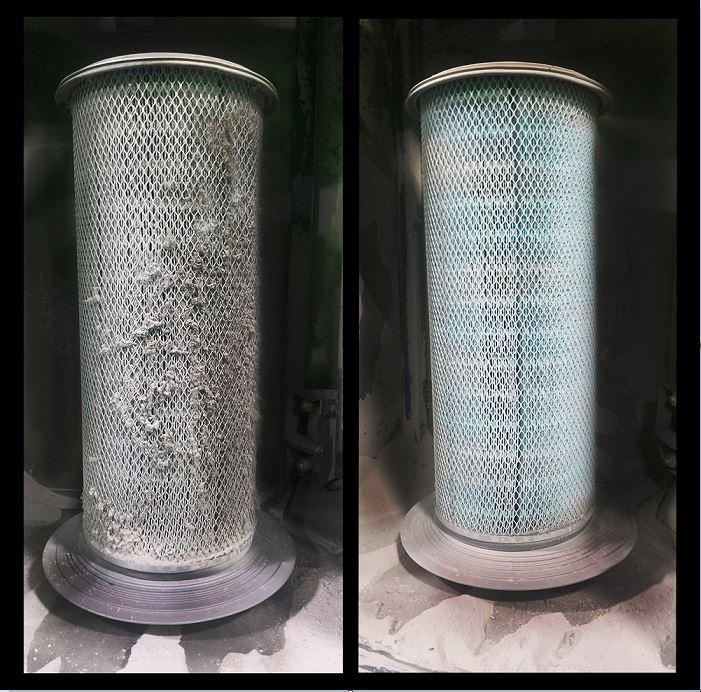
- Regular Maintenance: Perform regular inspections and maintenance of dust collection systems to prevent dust buildup.
- Housekeeping: Implement strict housekeeping protocols to keep work areas clean and minimize dust accumulation.
- Spark Detection and Suppression: Install spark detection systems that can detect and extinguish sparks before they enter the dust collection system.
4. Fire and Explosion Mitigation
- Explosion Vents: Use explosion vents or panels to safely release pressure and gases in the event of an explosion.
- Isolation Systems: Install isolation valves or barriers to prevent explosions from propagating through ductwork.
- Inerting: Introduce inert gases like nitrogen to reduce oxygen levels and prevent dust explosions.
5. Safety Training and Procedures
- Employee Training: Train employees on the hazards of combustible dust and the importance of following safety protocols.
- Emergency Procedures: Develop and practice emergency response procedures for fire and explosion incidents.
- Personal Protective Equipment (PPE): Ensure workers use appropriate PPE, such as flame-resistant clothing and respirators.
6. Compliance with Standards and Regulations
- NFPA Standards: Adhere to standards set by the National Fire Protection Association (NFPA), such as NFPA 484 for combustible metals and NFPA 654 for dust collection systems.
- OSHA Regulations: Follow Occupational Safety and Health Administration (OSHA) regulations related to combustible dust and workplace safety.
Implementing these measures can significantly reduce the risk of fire and explosions in metalworking dust collection systems. Regular reviews and updates to safety protocols, in line with evolving standards and technologies, are also crucial.
The 5 Things Needed for a Dust Explosion
- Combustible dust
- Oxygen
- Ignition source
- Dispersion (dust cloud)
- Confinement
Remove one and you reduce the risk. Ignore them and you’re gambling.
Are you operating with safety in mind? Need help…. LS Industries can provide you with a newly designed unit with all the bells and whistles to keep you safe.

What a Dust Fire Really Costs
- Equipment damage
- Facility downtime
- OSHA fines
- Insurance impact
- Injury risk
This isn’t just a safety issue; it’s a business risk.
Where Most Dust Systems Go Wrong
- Undersized collectors
- Poor duct design (dust buildup)
- No spark detection
- No explosion isolation
- Lack of maintenance
Most systems don’t fail because they’re broken, they fail because they were never designed for risk.
If you’re not actively evaluating your dust system for fire risk, you’re assuming it’s safe and that’s a dangerous assumption.
At LS Industries, we design systems with:
- Proper airflow
- Explosion protection
- Safe dust handling
Let’s review your system before it becomes a problem.
Melissa Palmer – Sales Manager