
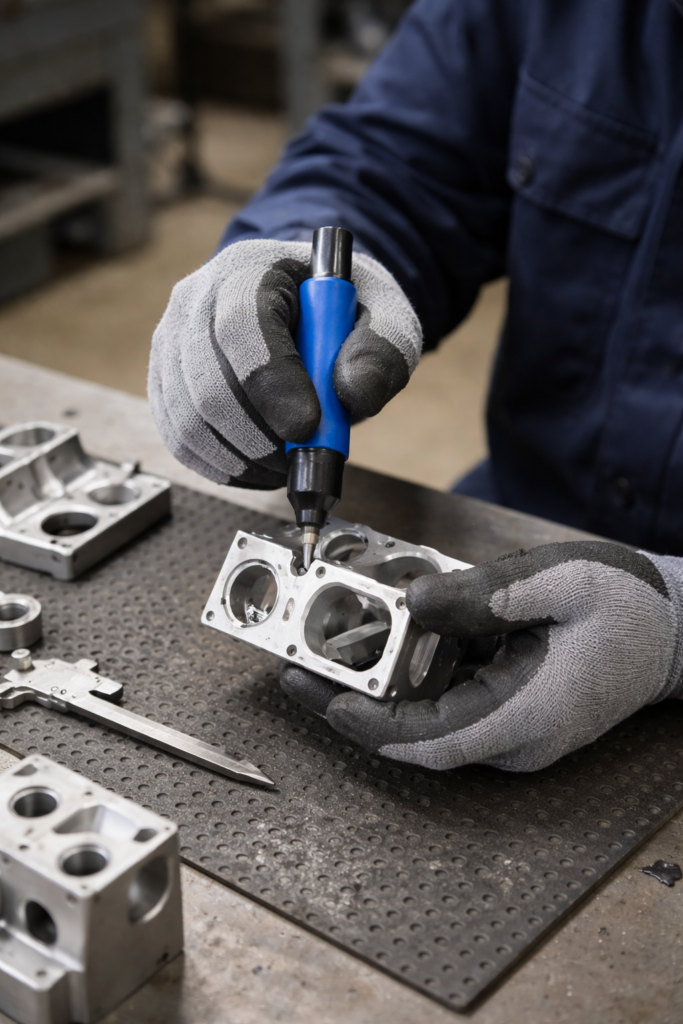
If you’re still deburring parts by hand, you’re paying for it, every single day.
In labor
In inconsistency
In slower production
And most shops don’t realize how much it’s costing them.
At its core, a vibratory machine is a multi-purpose surface finishing workhorse. The main purposes boil down to:
- Deburring – Removing sharp edges, burrs, and leftover material from cutting, stamping, or machining.
- Edge Radiusing – Softening edges to prevent injury, improve fit, or meet spec.
- Surface Smoothing – Leveling out tool marks or surface irregularities.
- Cleaning – Removing oil, rust, scale, or other contaminants.
- Polishing/Burnishing – Bringing parts to a bright, smooth finish.
- Coating Prep – Creating the ideal surface profile for paint, powder coat, plating, or other finishes.
Basically, if a part comes off a machine rough, dirty, or sharp, the vibratory machine is there to make it clean, smooth, and ready for whatever comes next.
Why Switching from Manual Finishing to Vibratory Systems Pays Off Fast
In metalworking, surface finishing is the unsung hero of quality. It’s the step that turns a raw, freshly machined part into something safe, functional, and ready for the next process. For decades, many shops have handled finishing tasks the old-fashioned way: grinding, filing, sanding, and polishing parts by hand. While that works, it’s a slow, labor-heavy approach with built-in limitations.
Here’s why making the switch isn’t just smart, it’s profitable.
1. Dramatic Labor Savings
Manual deburring or cleaning is time intensive. Each part is handled individually, and results depend on the operator’s skill and stamina. A vibratory machine processes hundreds or thousands of parts in a single batch, reducing labor hours by up to 70–90%. That frees up skilled operators for higher-value tasks instead of repetitive finishing work.
Example: If two employees spend 4 hours/day on manual finishing at $25/hour, that’s $200/day — $52,000/year. A vibratory system can cut that down to less than an hour/day, saving over $39,000 annually in labor alone. Not to mention the machine costs a lot less than personnel. That’s not theory that’s what we see in real shops.
2. Consistency & Quality
Hand finishing is subjective; no two operators will create exactly the same edge radius or surface profile. Vibratory systems, however, are precise and repeatable. Every cycle is identical, ensuring consistent burr removal, surface smoothing, and finish quality. This leads to fewer rejections and higher customer satisfaction. And we all know good quality sells and keeps your customers coming back for more.
3. Faster Turnaround Times
Manual methods slow down throughput. With a vibratory system, finishing happens in large batches, dramatically reducing turnaround times and eliminating bottlenecks. Faster finishing means orders ship sooner, a direct advantage for customer retention and cash flow.
4. Reduced Risk of Injury
Grinding wheels, files, and hand sanding carry risks including repetitive strain, cuts, flying debris. A vibratory machine keeps hands away from the action, reducing injuries and OSHA headaches. Healthier employees mean lower workers’ comp costs and fewer production interruptions. It is also hard to fill and maintain people in back breaking jobs. Set it and forget it. If the part can fit, handle the process motion, and benefit from uniform media contact, vibratory works great. If it’s too big, too delicate, too dirty, or too internally complex you’re better off with blasting, washing, or other precision finishing methods.
5. Multi-Purpose Capability
One vibratory machine can:
- Deburr sharp edges
- Clean oils, scale, and rust
- Polish or burnish surfaces
- Prepare parts for coating or plating means fewer specialized tools, less floor space used, and simplified training for operators.
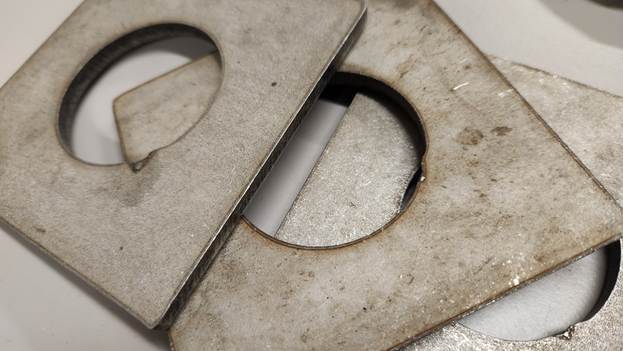
Before
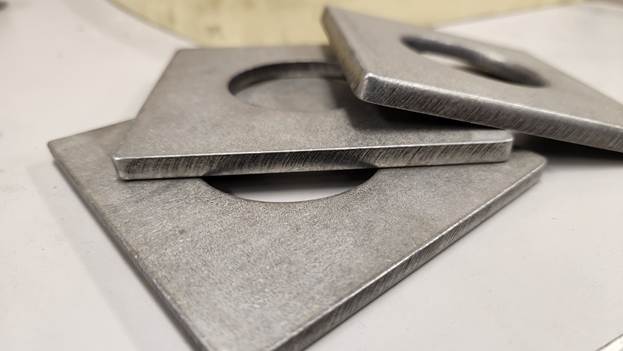
After
In some cases, you may need a multistage process but for many jobs a single machine will do the trick. If a person is doing repetitive finishing work, a machine should probably be doing it instead.
6. Media & Consumable Savings
Unlike manual methods that chew through abrasive belts, disks, and brushes quickly, vibratory systems use reusable media that can last months before replacement. Saving your bottom line on consumables.

7. Long Term ROI
While a vibratory system is an upfront investment, most shops see payback within a few short months through labor savings, faster throughput, reduced scrap, and fewer consumables. After that, it’s pure cost efficiency.
If you’re still finishing metal parts by hand, you’re paying a hidden tax in labor, inconsistency, and slower throughput. A vibratory system isn’t just a productivity upgrade it’s a profitability machine. It delivers faster, safer, and more consistent results while slashing costs throughout your operation.
Have you decided it’s time to upgrade your deburring? If so, you have options to consider.
Quick Rule of Thumb
- Bowl → High volume, small parts, automation
- Tub → Large parts, delicate parts, flexibility
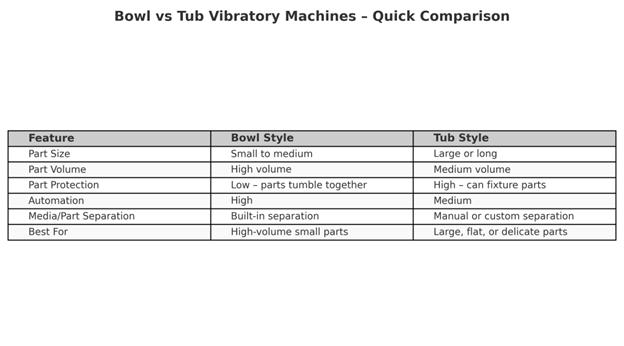
If the part can fit, handle the process motion, and benefit from uniform media contact, vibratory works great. If it’s too big, too delicate, too dirty, or too internally complex you’re better off with blasting, washing, or other precision finishing methods.
There is no one size fits all for surface prep. So, get a professional involved, run tests. but there are few places I have seen that would not benefit from a Vibratory.
Some Industries where it’s a must-have tool:
1. Automotive & Transportation
- Engine components, transmission parts, brackets, stamped panels
- Improves assembly fit, safety, and coating adhesion
2. Aerospace & Defense
- Aircraft fasteners, structural components, turbine blades
- Critical for meeting tight finish specs and eliminating stress risers from burrs
3. Metal Fabrication & Job Shops
- Laser-cut, plasma-cut, stamped, or machined parts
- Faster turnaround, less labor, and consistent finishes for mixed orders
4. Medical Device Manufacturing
- Surgical instruments, orthopedic implants, dental tools
- Required for precision, hygiene, and patient safety
5. Firearms & Sporting Goods
- Barrels, receivers, frames, and small precision parts
- Deburrs without altering tolerances, improving function and aesthetics
6. Agricultural & Heavy Equipment
- Large wear parts, brackets, and machined components
- Extends part life and improves coating adhesion in harsh environments
7. Marine & Shipbuilding
- Stainless and aluminum hardware, chain links, fasteners
- Removes sharp edges, cleans surfaces, and preps for coatings in corrosive conditions
8. Electronics & Electrical
- Housings, connectors, precision metal contacts
- Ensures smooth fit, reliable connections, and clean surfaces for plating
9. Jewelry & Custom Metalwork
- Small batches of high-polish parts
- Achieves uniform shine and removes fine burrs without handwork
10. Tool & Die / Machining Centers
- Cutting tools, dies, molds, and machined parts
- Increases tool life, smooths surfaces, and reduces manual bench work
If the industry makes metal parts that touch human hands, need to fit precisely, or require coatings/plating, vibratory finishing isn’t just nice to have, it’s part of the cost of doing business.
If you’re still finishing parts by hand, you’re paying a hidden tax in labor, inconsistency, and lost time.
At LS Industries, we help shops:
- Reduce finishing labor
- Improve consistency
- Increase throughput
Let’s look at your process and see what it’s really costing you. Manual finishing isn’t just inefficient it’s becoming a competitive disadvantage.
Download our Vibratory Troubleshooting Checklist to see where your current process is losing time and money.
Melissa Palmer – Sales Manager