Blasting has always been the job everyone needs… and nobody wants.
For years, shops relied on skilled operators willing to suit up, step into the blast room, and get it done.
Today? That workforce is disappearing.
In the world of surface preparation, blasting is the necessary evil everyone loves to hate. Whether you’re cleaning steel beams, prepping parts for paint, or knocking scale off heavy equipment, blasting gets the job done but the way it gets done is changing.
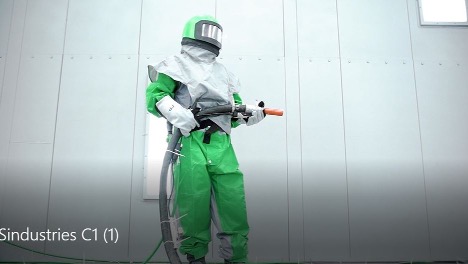
For decades, blasting has been a manual task: operators suiting up in heavy PPE, stepping into hot, noisy blast rooms, and spending hours maneuvering a nozzle. It’s hard, dirty work that takes a toll on the body and mind. Many veterans in the trade take pride in their skill, but today, shops are facing a reality check: the labor pool for this kind of job is shrinking fast. I know as I am raising two boys entering into the workforce and they certainly question with the automation around us why they would want to break their backs on harder labor. While many have already adapted to automation some still believe it is too expensive, but is it?
The Workforce Challenge
Ask any plant manager what their biggest headache is today, and you’ll hear the same thing: finding and keeping people. Younger generations are far less willing to take jobs that require heat suits, heavy respirators, and long hours in dusty rooms. Turnover rates in blasting positions are high, training new hires is costly, and absenteeism can bring an entire production schedule to a halt.
Meanwhile, companies are under pressure to hit higher throughput goals, meet stricter safety standards, and deliver consistent results. The clash between human limitations and production demands is what’s driving the conversation: do we keep blasting manual, or invest in automation?
Manual Blasting: The Pros and Cons
Pros:
- Lower upfront investment in equipment
- Flexibility for odd shapes or one-off parts
- Skilled operators can adjust on the fly
Cons:
- Heavy PPE, heat stress, and high risk of injury
- Inconsistent results due to fatigue and human error
- High turnover, training, and labor costs
- Slower throughput, especially on large runs
Manual blasting still has its place, but it comes with a steep price: human limitations. In today’s labor market, the hidden costs of staffing a manual blasting operation are adding up quickly.
What Manual Blasting Really Costs
- High turnover and training
- Lost production when operators are out
- Inconsistent quality and rework
- Safety risks and insurance impact
- Limited throughput
Manual blasting doesn’t just cost labor, it limits your entire operation. You can’t scale a business if your process depends on finding people who don’t want the job.
Automated Blasting: A Different Approach
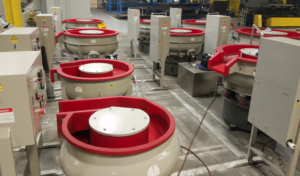
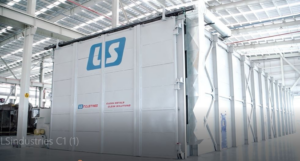
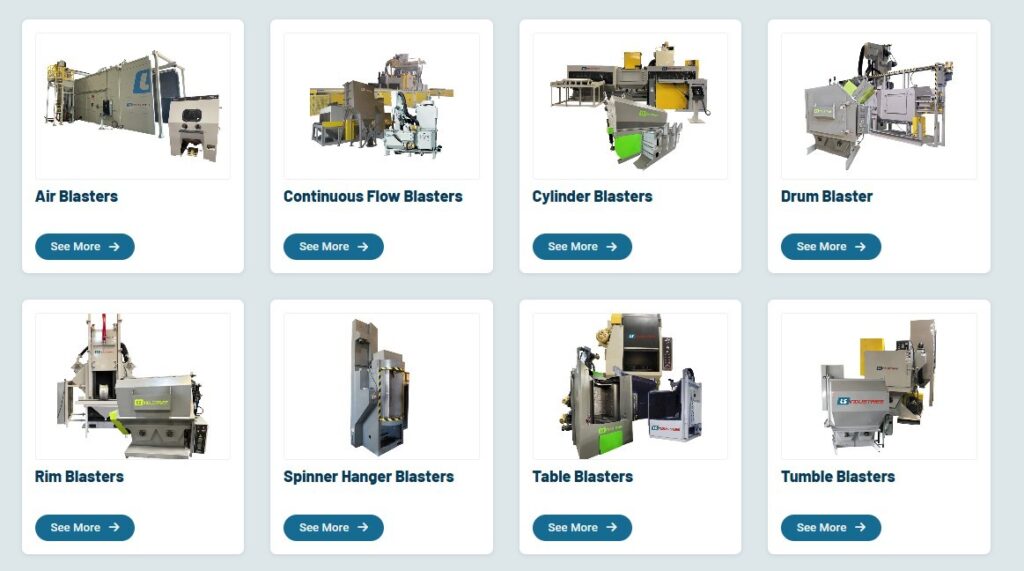
Automated blasting systems: roller conveyors, table blasters, tumble blasters, or fully integrated pass-through lines, are designed to take people out of the harshest parts of the job.
Why Automation Changes the Game
- Consistent results → fewer rejects
- Faster throughput → more capacity
- Fewer operators → lower labor risk
- Safer environment → easier hiring
Automation doesn’t just improve blasting it stabilizes your operation.
- Safety: Operators stay outside the blast chamber, running machines with the push of a button.
- Consistency: Automated wheels and conveyors deliver repeatable surface profiles.
- Efficiency: Large volumes can be processed in a fraction of the time.
- Labor Relief: Instead of finding three full-time blasters, one technician can run a machine.
- Scalability: When demand spikes, automation lets you keep pace with growth and new opportunities without scrambling for more labor. You can take on bigger contracts, run longer shifts, and expand production without worrying if you’ll have the workforce to match.
The upfront investment is higher, but in today’s climate, automation isn’t just about ROI, it’s about survival. Companies who can’t staff their blast rooms are already missing deadlines and losing bids to their more automated competitors.
The Human Factor
It’s important to note that automation doesn’t eliminate people, it repositions them. Instead of standing in a hot blast room, workers become machine operators, technicians, and quality controllers. The “dirty work” shifts to the machine, while people focus on oversight and higher-value tasks. Giving you consistency and reliability at the push of a button.
For younger workers, this makes the blasting industry more appealing: less grit in your teeth, more buttons on a control panel. It’s not about replacing people; it’s about making jobs sustainable and attractive in a workforce that has more options than ever.
The Bottom Line
Manual blasting will always have a niche, but in today’s labor-constrained world, it’s no longer practical as a primary solution. The workforce has spoken fewer are willing to endure unsafe, dirty, high-turnover jobs. Automated blasting gives manufacturers the consistency, throughput, and reliability they need, while creating a safer, more modern workplace for the people they still depend on.
The question isn’t if automation will replace manual blasting in most shops. The question is when and whether your operation will adapt in time. The workforce has already changed the question is whether your process has. Need help? Companies that solve their labor problem with automation are taking work from the ones that don’t. Reach out and let’s LS make it an easy decision for you.

Sales Manager
Melissa Palmer